

There are two reasons I started FilterFM.
First: Because you already know the AI landscape is a mess. Every time you try to learn something new, someone is either talking over your head, selling you something, or convincing you the world is about to end.
They tell you to “adapt or get left behind,” but none of them help you actually adapt.
So, that’s one reason FilterFM exists. I’ll just share what’s real with AI, what’s not, and what to do about it.
The second reason I started FilterFM?
Because everyone needs someone who can teach them what they need to know when the clock’s about to run out…
Just ask this guy:

This was 2012, in the middle of an all-nighter. A friend had come to me and said, “I’m screwed, man. The exam’s tomorrow and I haven’t studied anything.”
He passed the test a few hours after this photo. To this day, his dad says, “You’re the reason my son graduated” every time I see him.
I was known for this in undergrad. I could sit with you and a textbook all night, and by morning, you’d understand the essence of the topic… at least enough to pass.
I could help anyone pass any test. But there was one thing I couldn’t figure out…
“Your problem is you don’t know how to make money”
I started 3 failed startups in college. I was in a program at ASU designed for young entrepreneurs to do just that.
One day, I sat with a professor to talk about why nothing was working.
He said: “Your problem is you don’t know how to make money. It’s not glamorous, but here’s what I want you to do.”
He told me to start a marketing agency, but not to take any money. Just take rev share, in an eat-what-you-kill model.
So I taught myself how to run ads, build websites, and do SEO. Then how to run every CRM my clients lived inside.
Same all-nighter method, just applied to me instead of a friend’s math final: sit with the thing, find the structure underneath it, compress it down to what you can actually act on.
The company didn’t make any money for about 8 months.
By the end of the first year, it had made $15k.
Second year: $150k.
Then $450k.
$900k.
Eventually, more than $1M a year.
Seven years in, I exited the company. Today, it does around $3M a year in revenue and is a Global Top 50 HubSpot partner out of roughly 8,000 partners.
The businesses I build now are more technical with larger scale, but the underlying skill never really changed:
Learn complicated systems quickly, find the structure underneath them, and turn that structure into something useful.
And I probably wouldn’t have learned how to do that without failing so many times first.
Luck is a shortcut. A framework is the road.
One of the ideas that has shaped how I think about business, learning, and life is iteration.
Build something.
See what happens.
Learn.
Adjust.
Run the loop again.
If you’re lucky, you might start close to the destination.
But if you’re not lucky, if you build three businesses in a row that go nowhere, for example, you need another way forward.
Luck is a shortcut across the map. A framework is the road. The lucky person gets there faster; the person with the loop gets there reliably, and unlike the lucky person, they can do it again on purpose.
That idea became a huge part of how I operate.
It’s also why my company is called Framework Island.
And it’s why I’ve spent so much of my life obsessing over how humans organize, retain, and apply knowledge.
Building second brains (before it was cool)
My master’s thesis started with a simple observation:
Some of the most valuable knowledge inside a company is the knowledge nobody has written down.
I called it tribal knowledge.
The ideas, judgment, relationships, context, and experience living inside people’s heads.
Here was the model I proposed:
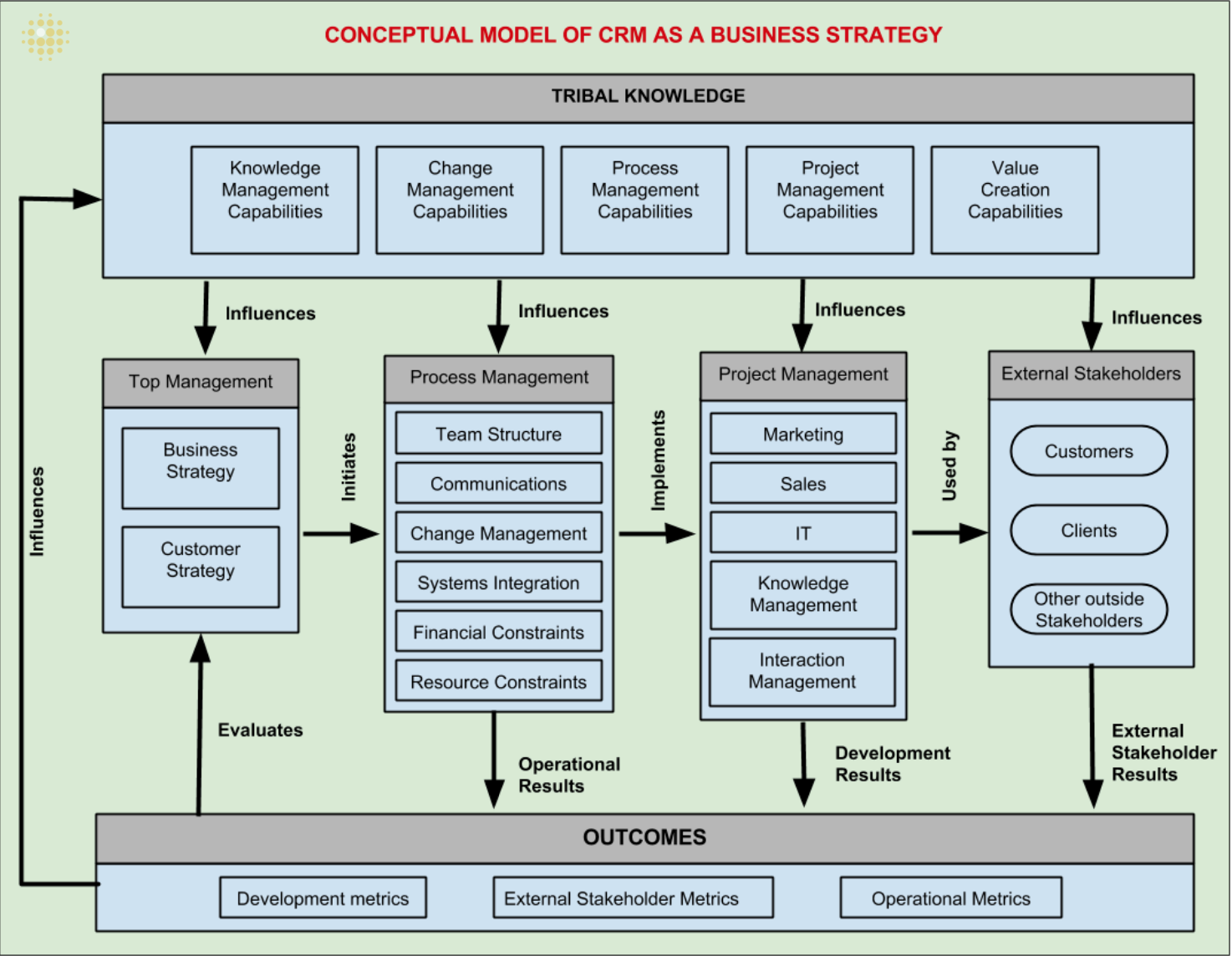
I put tribal knowledge above everything else because it influences strategy, processes, projects, and customers, while almost nobody manages it deliberately.
Over time, I became obsessed with the same problem at the individual level:
How do you capture what you know before you lose it?
How do you connect ideas across years?
How do you turn everything you read, hear, write, and experience into something you can actually use?
That led me deep into Personal Knowledge Management and building my own Second Brain.
In March 2022, I wrote this:
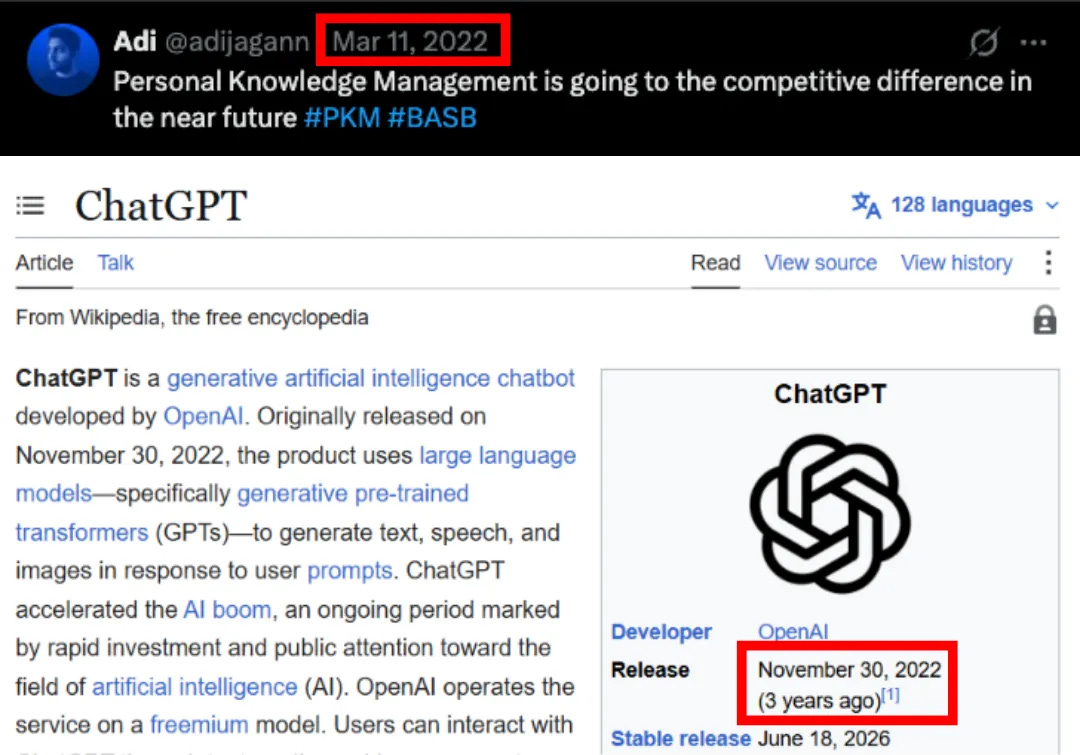
That was more than eight months before ChatGPT was released.
And by then, this wasn’t just something I was thinking about. I had already spent years building and refining my own system for capturing, organizing, distilling, and expressing knowledge.
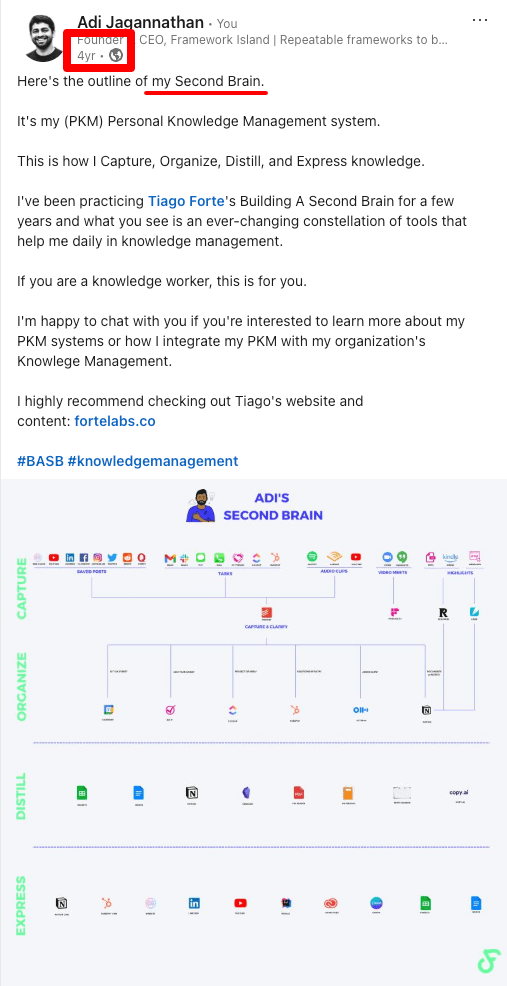
I had no idea ChatGPT was about to show up.
But when it did, something clicked.
All of these systems for capturing knowledge suddenly had a new purpose.
Because AI doesn’t just give us access to more intelligence.
It gives us leverage on everything we already know.
The better your context, the better your memory, and the better your systems for organizing knowledge, the more useful AI becomes.
That’s why AI didn’t start this obsession for me.
It raised the stakes.
Because we now have access to perhaps the greatest knowledge-leverage tool any of us have ever had.
And most people are still figuring out how to actually use it.
Ready to ace the test?
The person who built his own Second Brain, the person who kept swinging on startups until he hit, and the person who stayed up with friends all night so they’d pass their exams is the same person writing this letter to you right now.
You don’t need to be an expert in AI.
You don’t need to understand all the tech behind it.
You just need to pass the exam.
This newsletter is my way of pulling an all-nighter with you so you know enough to be dangerous.
I have a belief:
All concepts are inherently simple. And if one isn’t? It just means you haven’t had someone break it down for you yet.
I’ll see you every Thursday, doing just that.
- Adi
P.S. Why FilterFM? Filter the noise. Find the signal. Tune into what matters.